Smart Triage Management System (STMS)
archivedAn interactive triage kiosk on Raspberry Pi — SpO2, blood pressure, and temperature sensors for quick vitals capture, alerting, and HMS integration at the hospital point of care.
What it does
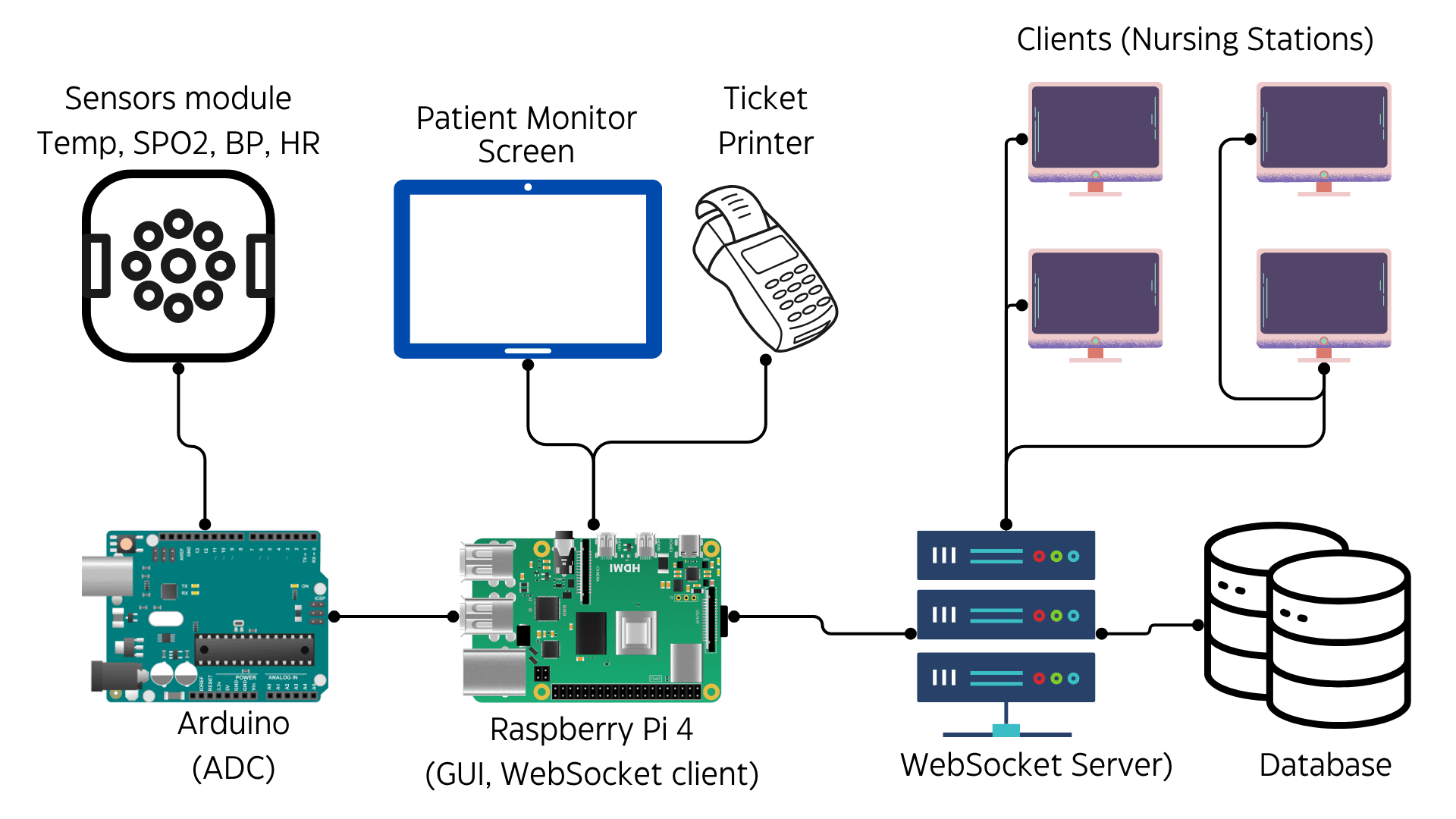
STMS is a smart triage management kiosk for hospital entry points — a Raspberry Pi with an attached touchscreen and vitals sensors that guides patients through a self-service measurement flow and surfaces triage results to staff.
- Interactive Qt/QML UI — welcome, language selection, hand-on-sensor prompts, live measurement, and completion screens
- Integrated vitals hardware — SpO2, blood pressure (BPM), and temperature readings over a serial link to the sensor module
- Real-time measurement flow — finger detection, SpO2 algorithm processing, error handling, and structured vitals output
- Alerting and triage output — completed readings packaged and pushed to connected systems for staff review
- HMS integration — WebSocket bridge and database layer to connect kiosk readings into hospital management workflows
Why I built it
A pilot to evaluate whether self-service triage kiosks could scale across hospitals nationally — the goal was faster initial vitals at busy entry points, consistent measurement capture, and a path to integrate results into existing HMS infrastructure without adding staff at the door.
How it works
- Hardware: Raspberry Pi kiosk with attached display and serial-connected SpO2/BP/temperature sensor module
- UI: Qt Quick / QML multi-screen patient flow with custom controls and on-screen guidance for correct sensor placement
- Device layer: C++
SerialportInterfacefor sensor I/O; SpO2 processing via embedded JS algorithm module - Integration:
WebSocketsserver for real-time vitals push to HMS clients;DatabaseInterfacefor local persistence and query execution - Pilot scope: evaluate UX, hardware reliability, and HMS handoff in a live hospital setting before a wider rollout
What I learned
Clinical kiosk software has to be foolproof for untrained users — every screen is a instruction manual, and finger-on-sensor detection matters as much as the vitals math. Piloting early exposed that HMS integration and alert routing are the real rollout gate: the measurement UI is only half the product.